
Mouse droppings:
what they look like.
What mouse droppings look like, how to tell them from rat and cockroach droppings, and how to clean them up safely without sweeping or vacuuming. A guide for Toronto homes.
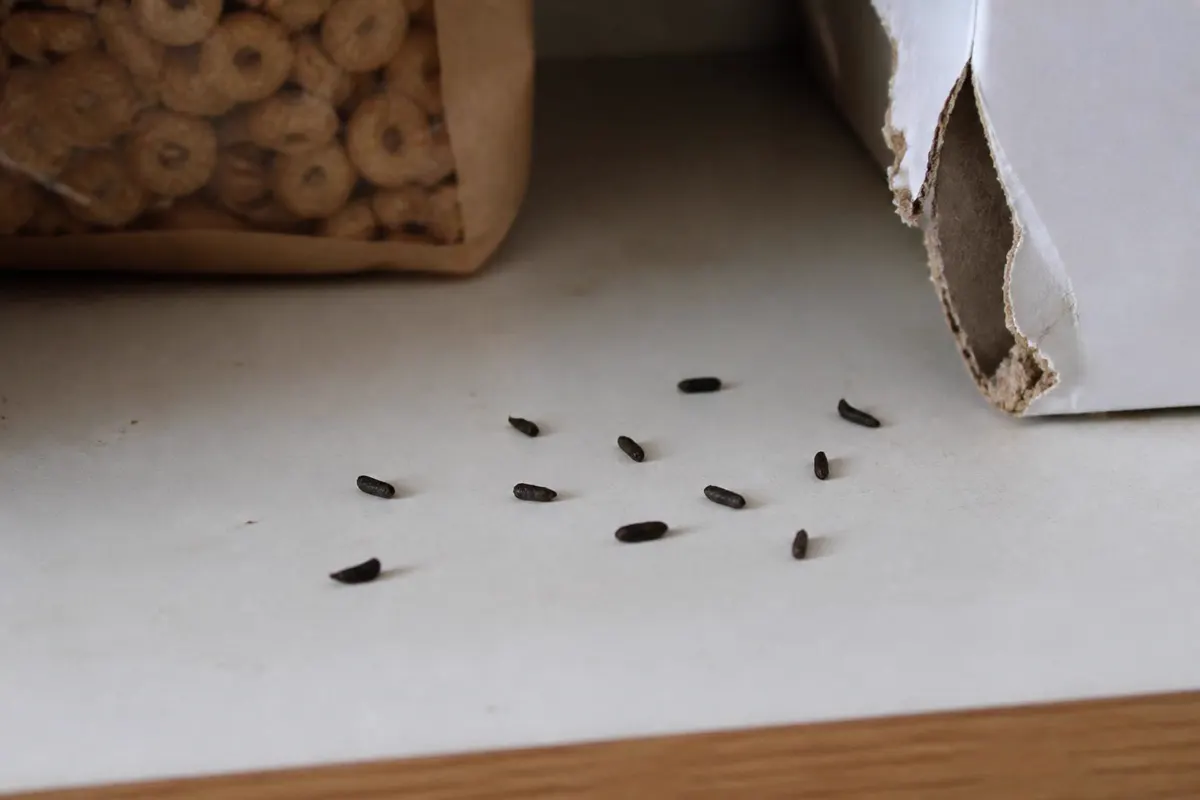
Droppings are usually the first sign of mice. A single mouse leaves dozens of droppings a day, so finding them along walls, in cupboards or behind appliances is a clear sign of activity. Droppings and urine can carry germs, so clean them up the safe way, and deal with the mice at the same time.
Identify and clean up
mouse droppings.
1. What mouse droppings look like
Mouse droppings are about 3 to 6 mm long, about the size of a grain of rice, and rod-shaped with pointed ends. They are dark brown to black, and are usually scattered along walls, in drawers, cupboards and behind appliances.
2. Fresh or old?
Fresh droppings are dark, shiny and soft. Older droppings are dry, dull, grey and crumble easily. Finding fresh droppings after a clean-up means mice are still active.
3. Mouse, rat or something else?
Rat droppings are much larger, about 12 to 20 mm, with blunt ends. Cockroach droppings look like specks of ground pepper or coffee grounds. Larger, rounded droppings in an attic can be from squirrels. If you are not sure, take a photo before cleaning up.
4. Prepare before cleaning
Open windows and doors to air the area out first. Wear rubber or plastic gloves, and if you are cleaning a confined space such as a cupboard, crawl space or shed, wear an N95 respirator.
5. Soak, then wipe
Spray the droppings, urine and nesting material with a disinfectant or a mix of 1 part household bleach to 9 parts water until soaked, and let it sit for about 10 minutes. Wipe it up with paper towels or a wet mop, then put the waste, used paper towels and any dead mice in two plastic bags, seal them and put them in the garbage.
6. Disinfect and wash up
Clean any mop you used with disinfectant and hot soapy water. Wash your gloves in disinfectant and hot soapy water before taking them off, then wash your hands well with soap and water.
Mistakes
to avoid.
- Sweeping or vacuuming dry droppings, which puts dust and germs into the air.
- Touching droppings or nesting material with bare hands.
- Cleaning up without dealing with the mice, so the droppings come back.
- Ignoring droppings near food; throw out any food they may have touched.
When to call
a professional.
Our mice exterminator service in Toronto costs $199–$399, before HST. Quotes are free, and we are fully licensed and insured.
Call a professional if
- You keep finding fresh droppings after cleaning up.
- There are droppings in several rooms, in the attic or inside walls.
- You find a large amount of droppings or nesting material.
- You are not sure whether the droppings are from mice or rats.
Common questions.
Are mouse droppings dangerous?
They can carry germs that make people sick, which is why you should not sweep or vacuum them dry. Rodents can also carry hantavirus. Infections are rare in Canada, but they can be serious, so clean up the safe way and see a doctor if you feel unwell afterwards.
How many droppings does one mouse leave?
A single mouse can leave dozens of droppings a day, so even a few mice can leave a lot of droppings quickly.
Does finding droppings mean I still have mice?
Fresh, dark, soft droppings mean recent activity. Clean up all droppings, then check the same spots over the next few days. New droppings mean mice are still there.
Still seeing activity?
Tell us what you are seeing, where and for how long. We will confirm the price before any work starts.
Guidance based on Health Canada: rats and mice and Public Health Agency of Canada: hantavirus. Updated October 10, 2026.